Avantis: Home
Avantis is an onchain perpetuals DEX to trade crypto & RWAs with up to 500x leverage while offering advanced risk management for LPs and loss protection for traders.
Quick Answer: What Is Avantis Crypto (AVNT) and Why It Matters
Avantis is a perpetual futures DEX on the Base network that enables leveraged trading on both crypto and real world assets, featuring zero fee perpetuals and advanced risk management tools. The decentralized exchange Avantis (DEX) allows for perpetual futures trading of crypto and real-world assets, positioning it as one of the leading derivatives platforms in decentralized finance.
The Avantis exchange (often called AvantisFi) lets users trade crypto assets like BTC and ETH alongside forex, commodities, and indices in a permissionless environment. Avantis allows traders to access leveraged positions across various assets, including cryptocurrencies, forex, commodities, and indices, with leverage options of up to 500x.
AVNT is the native token of Avantis and can be used for governance, staking to earn protocol rewards, and fee discounts. This avnt token powers the entire incentive structure, giving avnt holders voting rights and the ability to stake tokens for enhanced benefits.
Running on the Base network, Avantis has processed over $20 billion in cumulative trading volume since early 2024. Notable investors include Pantera Capital, Galaxy Digital, Salt Fund, and Symbolic Capital, further establishing Avantis's credibility and industry prestige. Three core features define the platform:
- Zero fee perpetuals that eliminate upfront trading costs
- Loss rebates returning up to 20% on losing minority-side positions
- Dynamic USDC vaults offering risk-managed returns for liquidity providers
Key metrics to know:
- Daily trading volume: approximately $12-13 million
- Market cap: $20-25 million range (based on circulating supply estimates)
- Where to buy Avantis: Binance, Kraken, Robinhood, and Base-native DEXs
Note: Avantis usually refers to notable companies in finance or education sectors. Avantis Investors, a separate entity owned by American Century Investments, manages over $50 billion in assets using a quantitative approach to target companies with higher expected returns. Avantis AI provides research and analytics solutions for professionals in finance, risk, and compliance, while Avantis Education specializes in classroom virtual reality (VR) technology for K-12 environments. This guide focuses specifically on the Avantis DeFi protocol.
Avantis Overview: How AvantisFi Built a Leading Perpetuals DEX
AvantisFi represents an onchain derivatives protocol combining leverage, synthetic real world assets, and risk-managed liquidity into institutional grade products accessible to all users. The avantis crypto platform operates as a perpetual futures DEX on the Base network, designed for 24/7 trading without centralized custody of funds.
Rather than traditional order books, Avantis markets use USDC vaults and oracles to quote and settle perpetual contracts. Supported assets include BTC, ETH, XAU (gold), major forex pairs, indices, and selected equities through synthetic exposure.
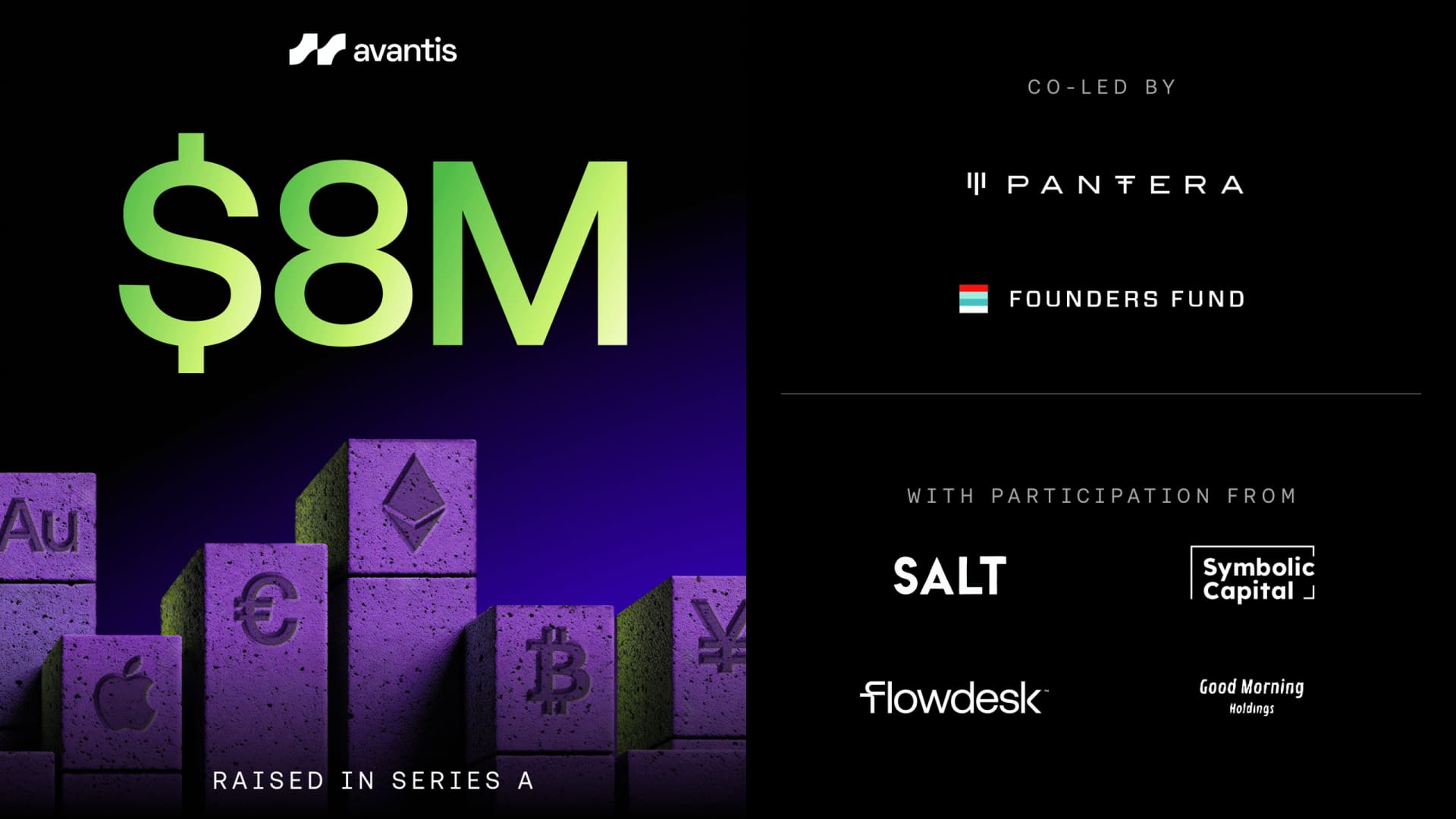
The protocol has attracted significant investment from Pantera Capital and Galaxy Digital, securing $12 million in funding. This backing from the founders fund and other investors establishes credibility as long-term DeFi infrastructure, with integration into the base ecosystem fund supporting ongoing development.
Core platform characteristics:
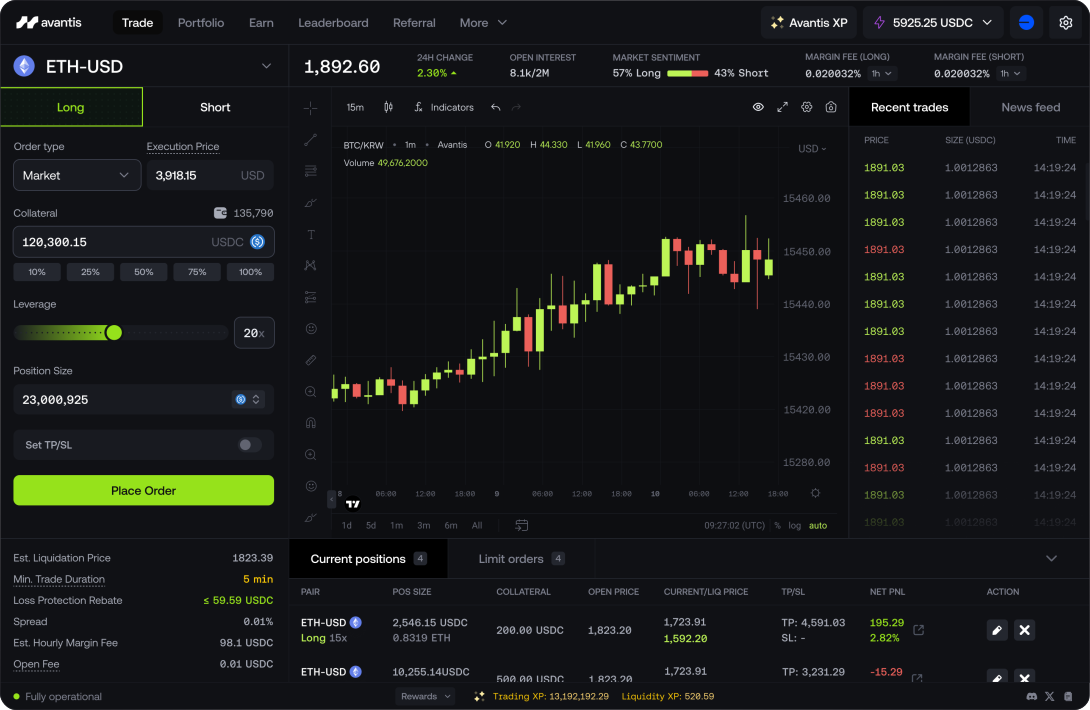
- Optimized for professional traders seeking low latency and institutional grade products
- Simple UI with clear margin and liquidation information for retail users
- Total value locked (TVL) at approximately $21 million on Base
How Avantis Markets Work: Perps, Zero Fee Perpetuals & Risk Engine
Avantis markets differ fundamentally from CEX order books by routing all trades against pooled liquidity backed by USDC deposits.
Traders on Avantis can open long or short positions using perpetual futures contracts, which do not have an expiry date, allowing them to maintain positions as long as they meet collateral requirements. Margin is denominated in USD, with variable leverage depending on asset volatility.
The platform utilizes a dual-oracle system for accurate pricing, which helps ensure that trades are executed at fair market prices, reducing the risk of slippage during volatile market conditions. This integration may include providers like the Pyth Network for real time price data.
Zero fee perpetuals explained: Zero-fee perpetuals allow traders to open and close positions without incurring upfront fees. Traders only pay fees when they make a profit or when specific trading or liquidity actions incur costs. This means that if a trade is unprofitable, the trader does not pay fees, making it a cost-effective option for high-leverage trading.
Avantis focuses on keeping fees low for investors and traders alike. The risk engine balances open interest across markets through dynamic funding rates and position limits, targeting stable returns for the liquidity provider base while managing protocol exposure.
AvantisFi futures fees vary by product:
- Fixed-fee perps carry constant low rates
- True zero fee perpetuals charge only when traders profit
Base Network Integration: Why Avantis DeFi Runs on Base
The Base network is an Ethereum Layer 2 built with OP Stack, providing low transaction costs and fast confirmation times ideal for high-volume derivatives trading.
Deploying Avantis on Base enables:
- Sub-second trade confirmations
- Minimal gas fees for transactions
- Full EVM compatibility for smart contracts and wallet connections
Avantis DeFi stands as one of the flagship perpetual DEXs on Base, frequently appearing in ecosystem dashboards and TVL rankings. Security derives from Ethereum's settlement layer while the rollup architecture handles throughput.
Users can bridge funds like USDC from Ethereum to Base, then deposit into Avantis vaults or trading accounts within minutes. Base network alignment provides early access to ecosystem incentives, oracle integrations, and infrastructure partnerships that enhance the platform's capabilities.
Liquidity Providers, Vaults & Staked AVNT
Avantis relies on capital from liquidity providers rather than peer-to-peer matching. USDC vaults back all trading activity, with deposits serving as counterparty to trader positions.
The platform separates liquidity provider deposits into tranches, enabling them to select different levels of risk, with senior tranches offering lower risk and smaller rewards, while junior tranches present higher risk with the potential for greater returns.
Liquidity providers on Avantis can earn fees in USDC from all trading activity, allowing them to generate returns based on the volume of trades executed on the platform. Additionally, Avantis allows liquidity providers to choose their own risk levels and lock periods, with the potential to earn up to 4x more rewards by locking funds for longer periods ranging from 14 days to 6 months.
AVNT incentives boost LP returns, with reward rates adjusting based on governance decisions. Staked AVNT unlocks additional benefits:
- Protocol rewards from fee revenue
- Fee discounts on trading
- Boosted yields in liquidity programs
- Governance voting power over parameters like loss rebates and new markets
Zero Fee Perpetuals, Loss Rebates & Advanced Trader Incentives
Avantis's trader-centric model combines zero fee perpetuals, loss rebates, and positive slippage to reduce costs and balance market participation.
Practical example: A profitable BTC-USD long position pays a small performance fee on gains. A losing trade pays no protocol fee beyond market PnL—traders pay only their realized loss.
Avantis also offers loss rebates, providing traders with up to 20% back on losing trades when they take positions against the majority, further enhancing the appeal of zero fee perpetuals. This loss protection mechanism encourages balanced open interest.
Positive slippage occurs when executions beat the quoted market price, passing savings directly to traders. Combined incentives keep Avantis markets balanced while reducing funding imbalances during volatile periods.
Stakers of AVNT receive larger allocations in future airdrops or loyalty programs, encouraging long-term participation in the ecosystem. Detailed parameters are published in AvantisFi documentation and subject to governance adjustment.
Avantis Price, Market Cap & Daily Trading Volume
AVNT demonstrates significant price volatility tied to both crypto market cycles and protocol usage metrics.
Current avantis price today (as of early May 2026):
- Price range: approximately $0.14-$0.156 USD across exchanges
- Market cap: estimated $20-25 million based on circulating supply
- Fully diluted valuation: approximately $150 million (1B total supply)
Supply metrics:
- Maximum number: 1 billion AVNT tokens. This maximum supply directly determines the fully diluted valuation (FDV), as FDV is calculated by multiplying the current price by the maximum number of tokens.
- Circulating supply: Subject to ongoing vesting from team and investor allocations
Daily trading volume on both AVNT pairs and the Avantis exchange signals market interest and liquidity quality. Protocol volume stands near $12-13 million daily.
Historical price performance:
- All-time high: $2.64 (September 2025)
- All-time low: $0.121 (April 2026)
- Recent recovery: approximately +20% from ATL
Technical indicators should be monitored alongside fundamental protocol metrics. Past price performance does not guarantee future returns—AVNT remains a high-risk asset requiring careful investment consideration.
How to Buy Avantis (AVNT) Token
Those looking to purchase AVNT can access both centralized exchanges and Base-native DEXs.
CEX purchase steps:
- Choose a supported exchange (Binance, Kraken, Robinhood)
- Complete KYC verification if required
- Deposit fiat or crypto
- Search for AVNT/USDT or AVNT/USDC pair
- Execute market or limit order
- Withdraw to a secure Base-compatible wallet
DeFi alternative: Buy USDC on any exchange, bridge to Base via official bridges, then swap for AVNT through the Avantis DEX or Aerodrome.
Trading volume and spreads differ by venue—check liquidity and avantis price across multiple exchanges before executing large orders. Trade Avantis pairs where liquidity is deepest to minimize slippage.
Security warning: Verify the official Avantis token contract address from trusted documentation. Phishing sites and fake avnt coin contracts exist—always confirm you're interacting with legitimate smart contracts.
Using Avantis DEX: From First Deposit to Advanced Strategies
The typical Avantis user journey involves bridging funds, depositing USDC, opening trades, and optionally providing liquidity.
Onboarding steps:
- Connect a Web3 wallet on Base
- Approve USDC for trading or vault deposits
- Review margin requirements, liquidation levels, and funding payments
Basic strategies: Simple long or short positions on BTC-USD, ETH-USD, and popular commodities like XAU-USD or major forex pairs.
Advanced approaches:
- Hedge spot holdings using Avantis perps
- Build delta-neutral strategies across correlated assets
- Utilize low AvantisFi futures fees for intraday scalping
Zero fee perpetuals and loss rebates can significantly improve net returns compared to traditional fee-heavy exchanges. Risk-conscious behavior remains essential—use stop-loss orders, avoid maximum leverage on thin Avantis markets, and track portfolio margin across positions.
Avantis Token (AVNT): Utility, Governance & Staking
The Avantis token (avnt token / avnt crypto) powers protocol incentives and governance systems.
Core AVNT utilities:
- Governance voting on protocol parameters
- Staking for fee discounts
- Earning share of protocol revenue
- Boosting rewards in liquidity programs
Staking AVNT provides traders with discounts on both fixed-fee and zero-fee trades, aligning token usage with trading activity. AVNT holders can vote on key protocol decisions, such as upgrades, fees, token burns, new products, and expansion to other chains.
Tokenomics summary:
- Total supply: 1 billion AVNT
- Allocations: Community ecosystem, team vesting, liquidity mining
- Buyback-and-burn: 30% of daily fees committed to token repurchase and destruction
This distribution aligns incentives between traders, LPs, contributors, and partners. Governance proposals may cover new Avantis markets, oracle integrations, or changes to loss rebates and fee structures.
AvantisFi Fees & Cost Structure for Traders and LPs
AvantisFi futures fees differ fundamentally from traditional CEX maker/taker schedules, emphasizing the zero fee perpetuals model.
Major fee types:
- Performance fees on profitable zero fee perpetuals
- Fixed trading fees on selected markets
- Funding payments between longs and shorts
- Network gas fees for onchain execution
Staking AVNT reduces effective fees, a factor traders should consider for long-term strategy. Liquidity providers earn protocol rewards from both performance fees and fixed perps, with net returns depending on trading volume, market direction, and vault risk settings.
Cost comparison example: A frequent trader on Avantis using zero fee perpetuals may face effective annualized costs below 0.01% post-rebates, versus 0.02-0.05% per-side fees on typical centralized derivatives exchanges.
Fee schedules and AVNT-denominated incentives appear in official AvantisFi documentation, subject to governance updates.
Risk, Regulation & What to Watch Before Using Avantis
Avantis is a DeFi protocol where using leverage, real world assets, and new onchain derivatives involves substantial risk.
Primary risk categories:
- Smart contract risk: Vulnerabilities may exist despite audits
- Oracle risk: Price feed failures could cause incorrect liquidations
- Liquidation risk: Using high leverage in trading can amplify both gains and losses, making positions more volatile and increasing the risk of significant financial loss
- Liquidity risk: Thin markets on certain asset pairs
Liquidity providers face risks as profitable traders can reduce their returns, and vulnerabilities in smart contracts may still exist despite audits, which can lead to potential losses.
Traders may experience price gaps when markets reopen, which can cause stop-loss or take-profit orders to be filled at levels different from those initially expected, increasing the risk of unexpected losses.
Recommendations:
- Start with small position sizes
- Avoid 500x leverage on volatile or illiquid pairs
- Read Avantis documentation thoroughly
Regulatory treatment of perpetual futures varies by jurisdiction. All information here is educational—not financial or legal advice.
Outlook: The Future of Avantis DEX, Avantis DeFi & AVNT
Avantis positions itself as a bridge between TradFi and DeFi, with ambitions to expand onchain derivatives access.
Potential roadmap developments:
- Deeper onchain equities and new asset categories
- Expansion of AvantisFi products to additional chains
- iOS application for mobile trading
Scaling goals include increasing daily trading volume, deepening USDC and AVNT liquidity, and growing staked AVNT participation. Note that while asset management firms typically manage assets through a combination of active selection and broad diversification (as seen with Avantis Investors, which was founded in 2019 by former employees of Dimensional Fund Advisors and combines indexing benefits with active management), the DeFi protocol focuses purely on enabling onchain derivatives.
Strategies by Avantis Investors aim for better-than-market returns by targeting factor exposure based on price and profitability, and Avantis Investors targets factors like low valuation and high profitability—approaches distinct from the trading infrastructure the Avantis DEX provides.
Monitor key metrics—trading volume, market cap, TVL, and avantis avnt price performance—when assessing ecosystem health. Avantis represents a compelling test case for institutional-grade DeFi infrastructure built on the Base network, though success depends on sustained adoption and careful risk management.